
Comparing entertainment-driven bartending with traditional service at a live event
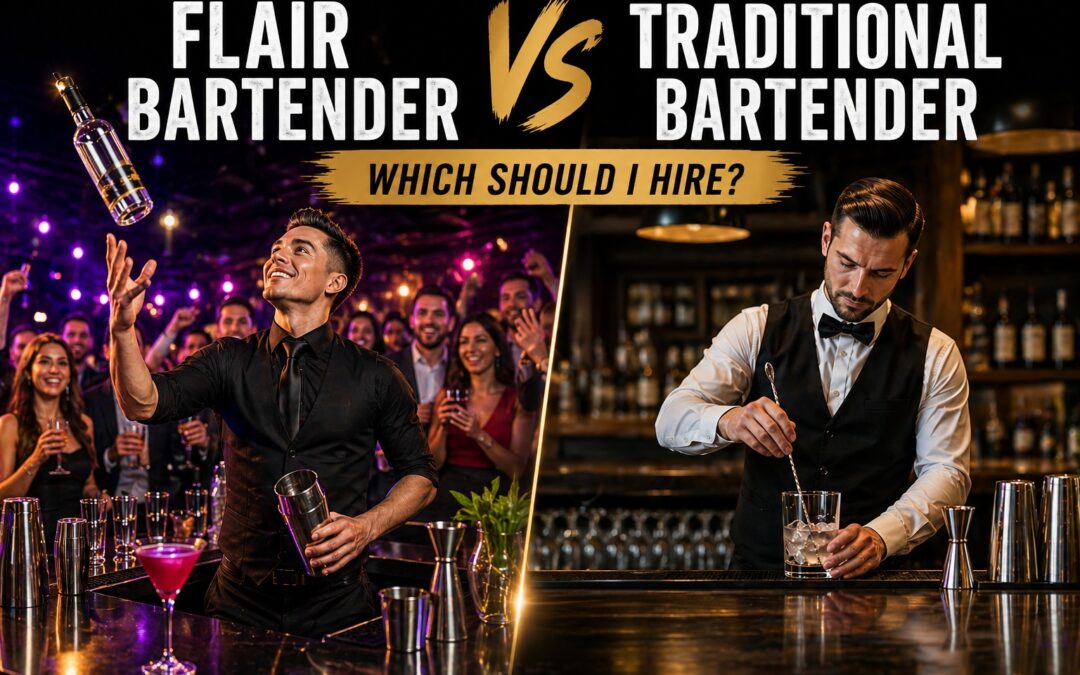
Flair Bartender vs Traditional Bartender : which should I hire?
If you’re deciding between a flair bartender vs traditional bartender, the right choice comes down to what kind of experience you want your guests to have. A traditional bartender serves drinks efficiently, while a flair bartender turns the bar into part of the entertainment.
For most events where guest engagement matters, the difference is not subtle, it’s the difference between a service station and a focal point.
Flair bartender vs traditional bartender: quick answer / overview
When comparing a flair bartender vs traditional bartender, here’s the straightforward breakdown:
- Choose a traditional bartender if your priority is simple, drink service with minimal attention drawn to the bar
- Choose a flair bartender if you want interaction, energy, and a memorable guest experience
A flair bartender doesn’t just make drinks, they create moments that guests remember and talk about.
Best Options / Main Breakdown
Flair Bartender
Who it’s for:
Event planners who want energy, interaction, and a built-in entertainment element
Why it works:
Flair bartending combines three critical elements:
- Excellent service
- Entertaining service
- High-quality cocktails
Most bartenders can hit one or two. A professional flair bartender hits all three consistently.
Best for:
- Corporate events
- Private parties
- Weddings with a lively atmosphere
- Cocktail hours that need a “draw”
What makes it stand out:
The first interaction is a surprise. Guests don’t expect the bar to entertain them. After that moment, they come back more open, more engaged, and ready to participate.
The bar stops being a place to grab a drink and becomes part of the experience.
Traditional Bartender
Who it’s for:
Events where service needs to stay low-profile and efficient
Why it works:
It’s reliable, predictable, and focused purely on drink delivery
Best for:
- Formal or quiet environments
- Structured events without entertainment elements
- Situations where speed is the only priority
What makes it stand out:
Consistency and simplicity, but it rarely creates memorable moments
What actually makes this work (insider perspective)
Most people misunderstand the difference in a flair bartender vs traditional bartender as just “bottle tricks.”
That’s not what creates impact.
What actually gets reactions from guests:
- The unexpected first interaction
- The build-up moments (multiple pours, synchronized movement, mini performances)
- The guest involvement (bringing someone into the spotlight, celebrating a birthday, creating a shared moment)
A strong flair bartender turns the bar into an attraction, not just a utility.
Also, not all flair is equal.
There are two types:
- Exhibition flair (show-focused)
- Working flair (real service environments)
[Find out more here]
For events, working flair is what matters most. It blends into service without slowing it down.
Practical tips when booking
Budget expectations:
You will pay more for a flair bartender than a traditional bartender. That’s because you’re hiring both service and entertainment.
Trying to go cheap here usually backfires.
What to ask before hiring:
- Are they experienced in working flair, not just exhibition?
- Have they worked with hotels, catering teams, or large-scale events?
- Can they integrate into an existing bar setup?
What to avoid:
- Someone who “can flair a little” but lacks real event experience
- Performers who disrupt the flow of service
- Bartenders who prioritize tricks over guest experience
Timing & logistics tips:
- Use flair bartending during peak guest interaction windows (cocktail hour, arrival, transitions)
- Position the bar where it can naturally attract attention without bottlenecking service
Alternatives or variations
When thinking about flair bartender vs traditional bartender, there are also hybrid approaches:
- Flair + traditional team: Flair bartenders handle front-facing interaction while traditional bartenders maintain speed behind the scenes
- Scaled-down flair: Subtle, stylish movements without full performances (great for semi-formal events)
- Premium entertainment bar setups: Fully designed bar experiences with branded cocktails and choreographed service
The right choice depends on how much attention you want on the bar.
When this is the best choice
Flair bartending is perfect if:
- You want guests to interact, not just observe
- The event has energy (DJ, social atmosphere, celebration)
- You want the bar to contribute to the entertainment
Flair bartending is not ideal if:
- The event is quiet, formal, or performance-focused (e.g., orchestral settings)
- You need completely low-profile service
- The environment doesn’t support energy around the bar
Final thoughts
Choosing between a flair bartender vs traditional bartender is really about deciding what role the bar plays in your event.
If it’s just there to serve drinks, a traditional bartender will do the job.
If you want it to create moments, draw people in, and elevate the atmosphere, flair bartending becomes one of the most impactful decisions you can make.
If you’re planning an event where guest experience matters, it’s worth exploring what a professional flair bartending team can bring to the table:
https://www.flairaholiks.com/
Flairaholiks is part of the broader Barlogical event entertainment family.